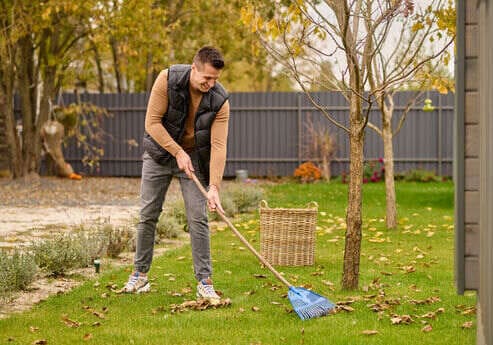
Fall yard cleanup can be one of those projects that feels simple until you are halfway through it. A few piles of leaves turn into hours of raking. Outdoor furniture needs to be moved. Garden beds need attention. Branches, planters, tools, and bags of yard waste somehow all need to get from one side of the property to the other.
By the end of the day, your yard may look great but your back, knees, shoulders, or hips may have something to say about it.
Yard work involves more physical effort than many people realize. Raking requires repeated pulling and rotation. Bagging leaves means bending and reaching. Moving debris adds lifting and carrying. When those movements are repeated over a long period, fatigue can affect how comfortably and efficiently you move.
At Direct Physical Therapy in Yonkers, we encourage people to think about fall cleanup much like they would any other physical activity. You do not have to avoid yard work to protect your joints. A little preparation, pacing, and attention to how your body is responding can make the job more manageable and may help reduce your risk of a strain or pain flare-up.
Why Fall Yard Work Can Be Tough on Your Body
One challenging part of yard work is that the physical demands can build gradually.
You may start with plenty of energy, good control, and an easy rhythm. After an extended stretch of raking, carrying, or bending, however, your muscles can become tired. That is often when you begin reaching farther than usual, bending awkwardly to grab one last pile, or twisting while carrying something because it seems faster than putting it down first.
Repetitive tasks can also keep asking the same muscles and joints to do the work over and over again. Raking primarily from one side, for example, may leave one shoulder, forearm, or side of the back working harder than the other.
If you already deal with back discomfort, arthritis, limited mobility, a previous injury, or reduced strength, you may notice fatigue or stiffness earlier. That does not automatically mean yard work is off-limits. It may simply mean the work should be adjusted to match your current abilities.
We talk about a similar idea in our guide to safely returning to outdoor activity. When your activity level changes, giving your body time to adapt can be more comfortable than jumping into several hours of strenuous work all at once.
Start With a Short Warm-Up
It is tempting to think, “I’m about to work in the yard. Isn’t that already exercise?”
It is, but that is exactly why warming up first can be helpful.
Your first task might require bending toward the ground, pulling forcefully on a rake, carrying a bag, or reaching for a branch. Going directly from sitting indoors to repetitive yard work does not give your body much time to transition.
Spend a few minutes moving before you get started. A comfortable walk around the property can help you loosen up. Gentle shoulder rolls, arm movements, ankle circles, and controlled bending through your hips and knees can also help prepare you for the motions ahead.
There is no need to turn the warm-up into a workout of its own. The goal is simply to move through comfortable ranges of motion before asking your body to repeat them for an extended period.
If you are returning to activity after surgery or an injury, or you have been given specific movement restrictions, follow the recommendations of your healthcare professional rather than trying to push through a generic routine.
Break a Big Cleanup Into Smaller Jobs
A clear fall afternoon can create a strong urge to get everything done before dinner.
Your body does not care about the deadline you invented for yourself.
Instead of tackling the entire property without stopping, divide the work into smaller sections. Rake one part of the yard, then switch to a lighter task. Organize tools for a few minutes. Move to some light pruning. Take a short walk before returning to another pile of leaves.
Changing tasks can vary the movements your body is performing rather than placing the same demand on one area for hours.
Breaks matter, too. They are not wasted time. They give you an opportunity to stand upright, walk around, drink some water, and notice whether your movements are becoming less controlled.
If you find yourself rushing, dragging your feet, struggling to lift something that was manageable earlier, or repeatedly adjusting because your back is tightening, those may be signs that fatigue is starting to affect the way you move.
Finishing the yard in two or three sessions is usually a much better outcome than finishing everything in one afternoon and spending the next several days regretting it.
Make Raking Easier on Your Back and Shoulders
Raking combines several movements at once: reaching, pulling, gripping, and turning. Repeating all of them from the same position can become tiring quickly.
Start by choosing a rake that lets you remain reasonably upright instead of constantly bending toward the ground. Keep your working area fairly close to you rather than stretching the rake as far as you can with every stroke.
Shorter, controlled pulls are often easier to manage than large sweeping motions.
It can also help to change your hand position periodically and alternate which side of your body is leading. Your nondominant side may feel awkward at first, so slow down until the motion feels comfortable.
Pay particular attention to twisting. Rather than planting your feet in one spot and repeatedly rotating through your back, move your feet when changing direction. Turning your whole body can reduce the amount of repeated rotation through your spine.
If back discomfort is already a recurring problem, our article on physical therapy for back pain explains how individualized treatment can address strength, mobility, and movement patterns that may be contributing to everyday limitations.
Be Careful With Heavy Leaf Bags and Yard Waste
The leaves themselves are light. A large bag filled with wet leaves is another story.
Before picking up any bag, planter, branch bundle, or container, test it first. If the load feels heavier than expected, make it smaller. There is no prize for carrying the heaviest bag in Yonkers.
Position yourself close to what you are lifting rather than reaching toward it. Use a stable stance and bend through your hips and knees as comfortably as your mobility allows. As you rise, keep the item close to your body instead of holding it out in front of you.
Just as importantly, avoid combining a lift with a twist. If something needs to go in another direction, first gain control of the load and then turn by moving your feet.
For bulky or heavy yard waste, consider letting equipment do more of the work. A wheelbarrow, garden cart, tarp, or wheeled container can reduce how much lifting and carrying you need to do.
If a load is too heavy or awkward to control comfortably, make it smaller or get help. Lifting technique matters, but no technique makes every load appropriate for every person.
Give Your Knees and Hips a Break
Garden beds and low landscaping can keep you close to the ground for surprisingly long periods.
Remaining in a deep squat, bending forward repeatedly, or kneeling on a hard surface may become uncomfortable, particularly if your knees or hips are already sensitive.
Try changing positions regularly. A kneeling pad may make short periods on the ground more comfortable. A low garden seat can provide another option. You can also alternate ground-level work with tasks that allow you to stand and move around.
When getting back up, take your time. If necessary, use a stable support rather than trying to spring directly from the ground.
People living with osteoarthritis may need additional adjustments based on which joints are affected and how symptoms respond to activity. Direct Physical Therapy offers individualized physical therapy for osteoarthritis that considers a person’s strength, mobility, symptoms, and everyday goals.
Do Not Forget About Your Shoulders and Hands
Back and knee discomfort tend to get most of the attention during yard work, but your upper body is working hard, too.
Raking involves repeated gripping and pulling. Pruning can require sustained hand pressure. Reaching above shoulder height may become tiring, especially if you are trying to work at the edge of your comfortable reach.
Keep frequently used tools nearby rather than repeatedly stretching to grab them. When trimming shrubs or branches, position yourself so the work is within a comfortable range whenever possible. Avoid prolonged overhead work, especially once your shoulders begin to tire.
Your tools matter as well. Handles that are damaged, slippery, too short, or uncomfortable to hold may cause you to grip harder or work in awkward positions.
If your hands are getting tired, your grip is weakening, or your shoulder movements are becoming less controlled, switch activities or take a break rather than forcing yourself through the rest of the task.
Watch Your Footing Around Wet Leaves
Fall leaves are beautiful. A wet layer of them covering pavement, roots, steps, or an uneven patch of lawn can be considerably less charming.
Before carrying a large bag or walking backward while raking, take a look at the area around you. Keep tools, hoses, branches, bags, and other debris out of common walking paths.
Wear footwear that fits securely and provides appropriate traction for outdoor work.
Also be aware of what you can see while carrying something. If a large bag blocks your view of the ground, make the load smaller or move it another way.
People who already have difficulty with balance, walking, or getting up and down from the ground may benefit from having someone nearby during more demanding yard work.
Know When Soreness Deserves More Attention
Feeling tired after several hours of physical activity is not unusual, particularly when the movements are different from what you normally do.
Pain is not something you need to “win” against, though.
Stop the activity if you experience sudden or severe pain, noticeable swelling, new weakness, or symptoms that make it difficult to move normally. Numbness, tingling, or pain traveling into an arm or leg should also be taken seriously, particularly if the symptoms persist or worsen.
If pain continues after the activity, repeatedly returns whenever you rake, lift, or bend, disturbs your sleep, or begins interfering with normal daily tasks, consider talking with a healthcare professional.
New bowel or bladder control problems associated with back pain can require urgent medical evaluation. Significant or rapidly developing weakness, substantial loss of sensation, or serious difficulty walking also deserves prompt medical attention.
When something feels meaningfully different from ordinary muscle fatigue, it is better to have it evaluated than to assume that working through it will make it disappear.
How Physical Therapy Can Help With Yard Work-Related Pain
Physical therapy is not only for major injuries or post-surgical rehabilitation. It can also be useful when everyday activities such as gardening, housework, walking, exercise, or yard maintenance repeatedly become uncomfortable.
A physical therapist can look at more than the location of your pain. An evaluation may consider your strength, joint mobility, balance, flexibility, endurance, and the way your body handles movements such as bending, reaching, lifting, carrying, or getting up from the ground.
From there, your treatment plan can be tailored to what you actually need.
Someone dealing with recurring low back discomfort may need a very different approach from someone whose knees become stiff while gardening or whose shoulder begins hurting after raking. Treatment may include targeted exercise, movement education, activity modifications, progressive strengthening, and strategies for gradually returning to the activities that matter to you.
For people dealing with spine-related conditions or persistent limitations, you can also learn more about our spinal rehabilitation services. Our broader physical therapy services in Yonkers are designed around individualized goals rather than a one-size-fits-all exercise plan.
Take Care of Your Yard Without Ignoring Your Body
Fall cleanup does not need to become an endurance test.
Give yourself a few minutes to warm up. Break the work into smaller sessions. Change tasks and positions instead of repeating one movement for hours. Keep loads manageable, use equipment when it can reduce unnecessary carrying, and pay attention when fatigue begins affecting how you move.
Most importantly, remember that there is no single “perfect” way to perform every yard task. Bodies, injuries, mobility levels, and physical demands are different. The goal is to find an approach that lets you stay active while respecting what your body can comfortably handle right now.
If back or joint pain is making yard work, exercise, household responsibilities, or other everyday activities more difficult, Direct Physical Therapy is here to help.
Our Yonkers physical therapy team focuses on personalized care designed around your symptoms, your goals, and the activities you want to return to. Together, we can work toward improving your strength, mobility, function, and confidence so that staying active feels more manageable.
Contact Direct Physical Therapy to schedule an evaluation and talk with our team about a treatment plan tailored to you.
Note: This article is intended for general educational purposes and is not a substitute for individualized medical advice, diagnosis, or treatment. Speak with a qualified healthcare professional about symptoms, injuries, or activity restrictions specific to you.